★★★★★
"I signed up for information and was given a very professional assessment of my properties potential with detailed investment information and projected savings. No pressure and very courteous staff members"

ROBIN MCLAUGHLIN
6 months ago
The federal, state, and utility solar incentives available in Wyoming for 2026, then matched to a vetted local installer.
We do the math for your address and match you with one vetted installer. Free, no obligation.
A vetted installer covering Wyoming will follow up within 1 business day. Reference ID:
The 30 percent federal Residential Clean Energy Credit under Section 25D expired for property placed in service after December 31, 2025. Cash and loan purchases made now receive no federal tax credit. Wyoming levies no personal income tax, so there is no state income tax for a solar credit to reduce and none exists.
Source ↗Section 48E, the commercial Clean Electricity Investment Credit, survives at 30 percent and is available to third-party owners of residential systems under leases and power purchase agreements. The provider claims it and may reflect part of the value in the rate offered. Ask what they claim and what actually reaches you, and confirm with a tax advisor.
Source ↗Wyoming law requires utility companies, including investor-owned utilities such as Rocky Mountain Power, rural cooperatives and municipal providers, to offer net metering for residential solar systems up to 25 kW. That breadth is unusual: in most states the requirement reaches only investor-owned utilities and leaves cooperatives and municipal utilities outside it. The individual system capacity limit is 25 kW, comfortably above household need.
The Rocky Mountain Power January 2026 tariff sets a basic charge of $24.24 per month alongside a flat energy rate of 12.175 cents per kWh under Schedule 2. That basic charge is roughly $291 a year and it does not fall when your consumption falls, so a household that halves its energy purchase does not halve its bill. A savings projection calculated as a percentage of your current bill, rather than as avoided kilowatt hours, will overstate the result. Ask that fixed charges appear explicitly in the arithmetic.
Wyoming levies no personal income tax, so a state income tax credit for solar is not an instrument available to it and none exists. National guides describing a federal plus state credit stack are describing other states. Ask your county assessor how residential solar is treated for property assessment at your address, since that is administered locally.
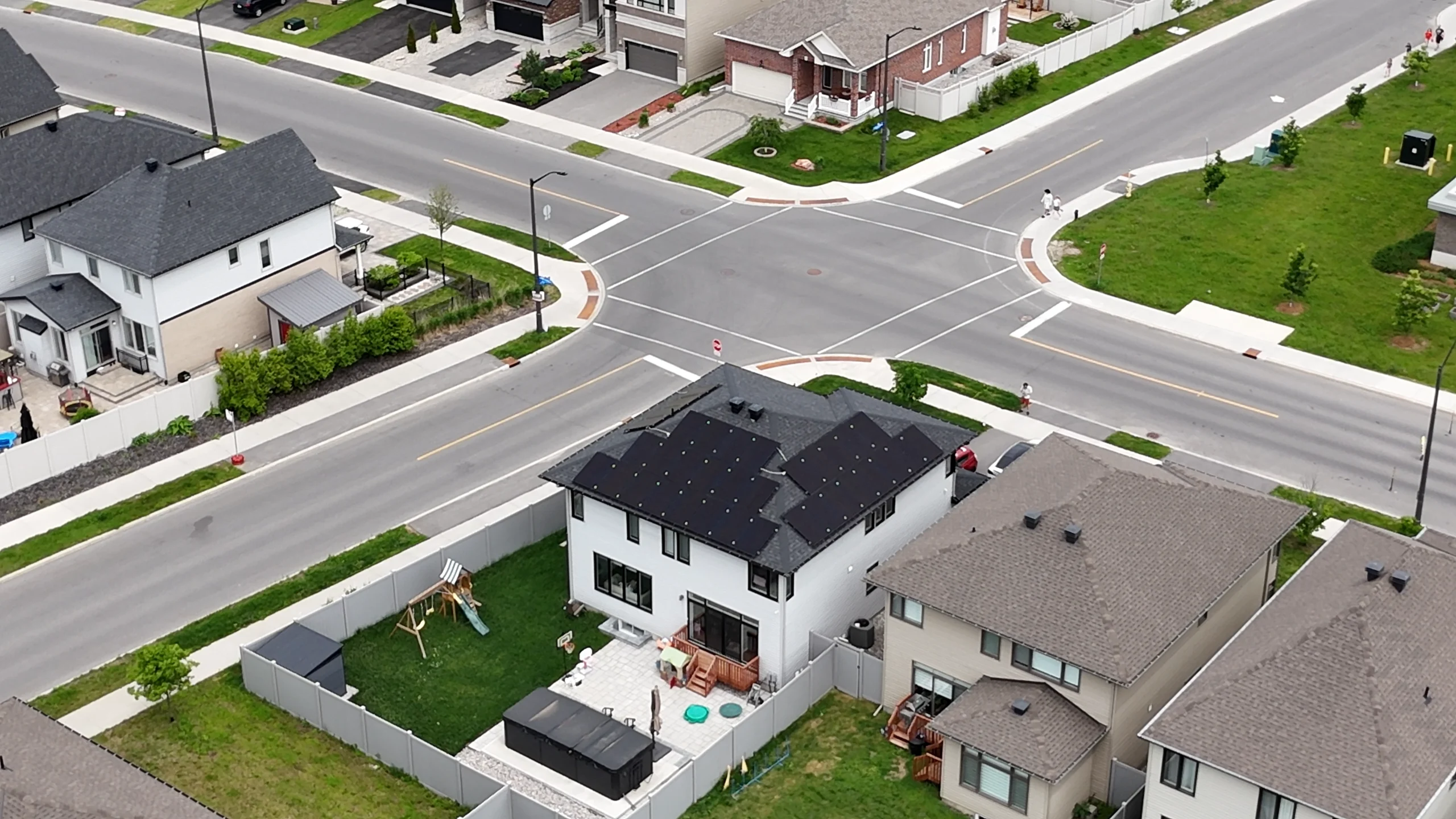
Wyoming requires net metering of every kind of electricity provider. Investor-owned utilities such as Rocky Mountain Power, rural electric cooperatives and municipal providers must all offer it for residential solar systems up to 25 kW. That is worth stating because it is genuinely unusual. Across the states covered on this site, the recurring caution is that a statutory requirement reaches only the investor-owned utilities while cooperatives and municipals set their own terms, which is why so many pages tell readers to check who bills them before trusting a figure. Wyoming largely removes that problem: whoever serves your address, the obligation applies. The individual system capacity limit of 25 kW is comfortably above what a household would install, so it rarely constrains a design. What deserves more attention is the fixed side of the bill. The Rocky Mountain Power January 2026 tariff carries a basic charge of $24.24 per month alongside a flat energy rate of 12.175 cents per kWh under Schedule 2. Roughly $291 a year of that bill is not about kilowatt hours at all and does not fall as your consumption does. A solar system reduces the energy portion of your bill; it does not touch the basic charge. So a projection that models savings as a percentage of your current bill will overstate the result, sometimes substantially, and the correct approach is to model avoided kilowatt hours at the energy rate and leave fixed charges untouched.
Every review here is real, attributed, and links back to the installer's verified Google profile.
"I signed up for information and was given a very professional assessment of my properties potential with detailed investment information and projected savings. No pressure and very courteous staff members"
"I was communicating with Josh. He put together a detailed proposal very quickly and provided two options to consider.Very pleased with his professionalism."

"We had difficulty with our monitoring site ans called for help. Ken not only got us back on the site, but introduced us to some new features. He spent a great deal of time with us and was patient and gave clear instructions as he walked us through the process. Very satisfied with support."

See which of these Wyoming programs you qualify for, with the math done for your address. Free, no obligation.
Get my Wyoming quote