
★★★★★
"I signed up for information and was given a very professional assessment of my properties potential with detailed investment information and projected savings. No pressure and very courteous staff members"

ROBIN MCLAUGHLIN
6 months ago
The federal, state, and utility solar incentives available in Rhode Island for 2026, then matched to a vetted local installer.
We do the math for your address and match you with one vetted installer. Free, no obligation.
A vetted installer covering Rhode Island will follow up within 1 business day. Reference ID:
The 30 percent federal Residential Clean Energy Credit under Section 25D expired for property placed in service after December 31, 2025. Cash and loan purchases made now receive no federal tax credit. Rhode Island state-level support is unusually good by 2026 standards, so the stack is thinner than it was rather than empty.
Source ↗Section 48E, the commercial Clean Electricity Investment Credit, survives at 30 percent and is available to third-party owners of residential systems under leases and power purchase agreements. The provider claims it and may reflect part of the value in the rate offered. Ask what they claim and what actually reaches you, and confirm with a tax advisor.
Source ↗Net metering gives customers with eligible renewable systems bill credits for all power generated up to 125 percent of on-site consumption during a billing period. That 125 percent figure is a real cap on how large a system can usefully be, and it is expressed against your own consumption rather than against a fixed kilowatt limit.
Source ↗The Renewable Energy Fund residential grant, administered through Rhode Island Commerce, has been reported at $0.65 per watt capped at $5,000, with a $2,000 adder where a battery is included. Treat those as reported figures rather than quoted ones: Rhode Island Commerce does not publish the per-watt amount or the cap for Small Scale projects on its programme page, so the number in a quote should be traced back to REF directly. It is available to net-metered systems only, so choosing the Renewable Energy Growth programme instead forfeits it. This runs in application rounds with firm dates rather than continuously, with the 2026 Small Scale deadlines published as 1 May, 17 July and 16 October, and a block closes on its application close date or earlier if available funds are reached. The published process runs installer application, REF review, award letter, and then installation, so treat the award letter as a precondition and do not let work begin before it arrives. Confirm the current round, amount and cap with Rhode Island Commerce before letting a quote include the grant.
Source ↗Under the Renewable Energy Growth programme, administered by Rhode Island Energy, a participant sells the entire output of the system at a fixed tariff rate under a long-term contract rather than offsetting their own consumption. Rates are set for each programme year and published as ceiling prices, and recent published figures for small residential solar have been in the high twenties to low thirties of cents per kWh depending on class and source. The programme year opens on April 1 and enrolment runs first come, first served until fully subscribed. Confirm the current programme year rate, contract term and remaining capacity directly with Rhode Island Energy.
Rhode Island exempts solar equipment from the 7 percent state sales tax. Nothing is claimed and nothing is filed: the tax should simply be absent from your quoted price. On a system in the twenty to thirty thousand dollar range that is well over a thousand dollars, so it is worth confirming rather than assuming.
Under Rhode Island General Laws 44-3-21, renewable energy systems are exempt from local property tax assessment for 20 years from the date of installation, applying to both primary and secondary residences. Unlike the equivalent exemptions in Maine and New Hampshire, Rhode Island does not require the homeowner to file a separate application, so this is one of the few incentives you cannot lose through paperwork.
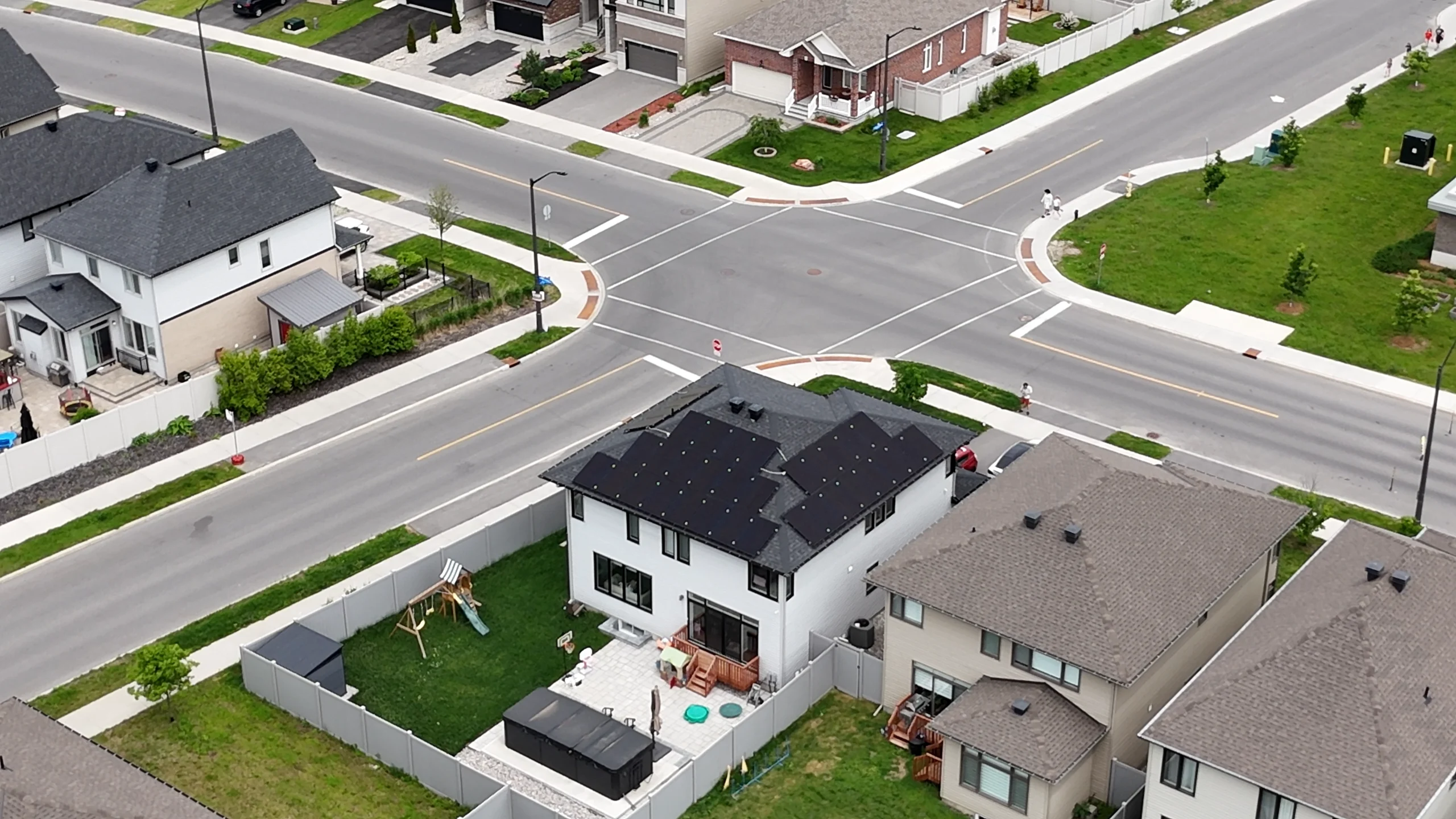
Rhode Island offers two mutually exclusive routes for a residential solar system, and choosing between them is the most consequential decision in the project. The first is net metering: the customer receives bill credits for all power generated up to 125 percent of on-site consumption during a billing period, and remains eligible for a Renewable Energy Fund grant, which has been reported at $0.65 per watt capped at $5,000 with a $2,000 adder for storage. The 125 percent figure functions as a sizing ceiling expressed against your own usage rather than as a fixed kilowatt limit, so a household that reduces its consumption after installing solar can find its system sitting above the useful range. The second route is the Renewable Energy Growth programme, administered by Rhode Island Energy, under which the customer sells the entire output of the system at a fixed tariff rate for a long contract term rather than offsetting their own consumption. That trades the upside of rising retail rates for a known, contracted income, and it excludes the Renewable Energy Fund grant, which is available to net-metered systems only. The programme year opens on April 1 and enrolment runs first come, first served until fully subscribed, so timing matters in a way it does not for net metering. Ask any installer to model both routes on the same system, over the same term, with the grant included on the net metering side, and to state the assumptions behind each.
Every review here is real, attributed, and links back to the installer's verified Google profile.
"I signed up for information and was given a very professional assessment of my properties potential with detailed investment information and projected savings. No pressure and very courteous staff members"
"I was communicating with Josh. He put together a detailed proposal very quickly and provided two options to consider.Very pleased with his professionalism."

"We had difficulty with our monitoring site ans called for help. Ken not only got us back on the site, but introduced us to some new features. He spent a great deal of time with us and was patient and gave clear instructions as he walked us through the process. Very satisfied with support."

See which of these Rhode Island programs you qualify for, with the math done for your address. Free, no obligation.
Get my Rhode Island quote