★★★★★
"I signed up for information and was given a very professional assessment of my properties potential with detailed investment information and projected savings. No pressure and very courteous staff members"

ROBIN MCLAUGHLIN
6 months ago
The federal, state, and utility solar incentives available in Nebraska for 2026, then matched to a vetted local installer.
We do the math for your address and match you with one vetted installer. Free, no obligation.
A vetted installer covering Nebraska will follow up within 1 business day. Reference ID:
The 30 percent federal Residential Clean Energy Credit under Section 25D expired for property placed in service after December 31, 2025. Cash and loan purchases made now receive no federal tax credit, and Nebraska has no state solar tax credit to fall back on.
Source ↗Section 48E, the commercial Clean Electricity Investment Credit, survives at 30 percent and is available to third-party owners of residential systems under leases and power purchase agreements. The provider claims it and may reflect part of the value in the rate offered. Ask what they claim and what actually reaches you, and confirm with a tax advisor.
Source ↗Nebraska is the only state with 100 percent public power. There are no investor-owned electric utilities: every customer is served by a public power district, a municipal utility or a cooperative, more than 165 entities in total. For a solar buyer that means there is no single regulated tariff to look up. It also means the utility that bills you is customer-owned and governed by a board, so the terms are set closer to home than in a state where a commission regulates a shareholder-owned company.
Nebraska statute sets 25 kW as the threshold at which net metering must be offered to customer-generators. That is comfortably above what an ordinary household would install, so the statutory cap is rarely the binding constraint. The statute does not require net metering for systems larger than 25 kW, though utilities may allow it at their discretion. Omaha Public Power District, Nebraska Public Power District and Lincoln Electric System all offer net metering programmes.
The statute sets a floor rather than a uniform scheme. Net metering and credit rules vary by district, so how excess generation is credited, whether credits carry forward, whether they expire and on what date, and what interconnection costs are all questions for your own utility rather than for a statewide guide. Confirm the rules with your utility before sizing a system.
Nebraska does not offer a state income tax credit for residential solar. With the federal residential credit expired for property placed in service after December 31, 2025, a cash or loan purchase now receives no tax credit at either level. Ask your county assessor how residential solar is treated for property assessment at your address, since that is administered locally.
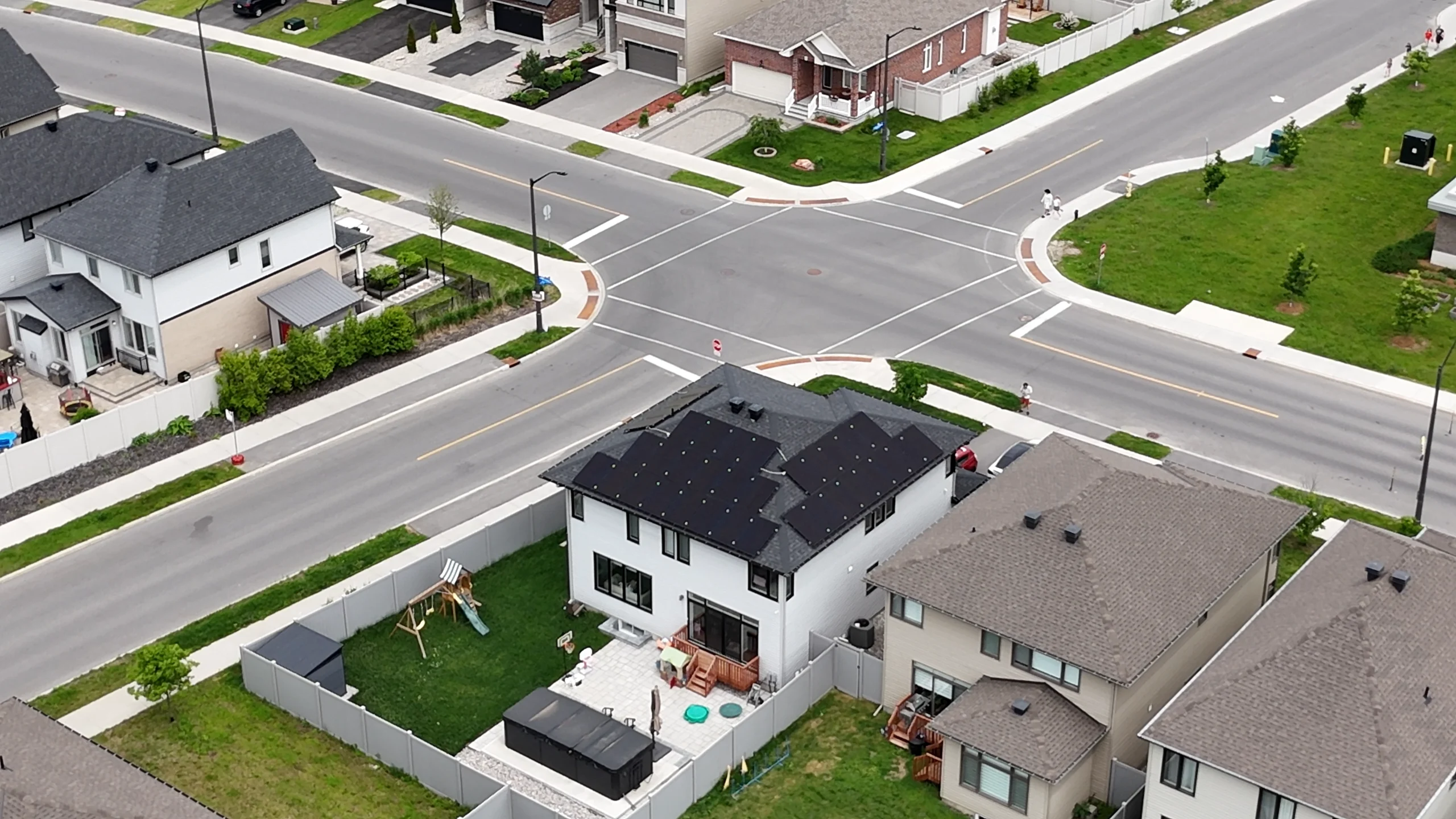
Nebraska approaches solar differently from every other state because of how its electricity industry is organised. It is the only state with 100 percent public power: there are no investor-owned electric utilities, and every customer is served by a public power district, a municipal utility or a cooperative, more than 165 entities in all. The consequence for a homeowner is that there is no single regulated tariff to consult. State statute at Sections 70-2001 to 70-2004 requires net metering to be offered to customer-generators at up to 25 kW, which is comfortably above household need, so the statutory ceiling is rarely what constrains a design. The statute does not require net metering above 25 kW, though utilities may allow larger systems at their discretion. What the statute does not do is impose a uniform crediting scheme, and net metering and credit rules vary by district. How excess generation is credited, whether credits carry forward, whether they expire and on what date, what the interconnection process costs and how long it takes are all decided by your own utility. Omaha Public Power District, Nebraska Public Power District and Lincoln Electric System all run net metering programmes, and each sets its own terms. There is one genuine advantage in this structure that is easy to miss: because these utilities are customer-owned and governed by boards rather than by shareholders, the people setting your solar terms are accountable to you as an owner rather than to investors.
Every review here is real, attributed, and links back to the installer's verified Google profile.
"I signed up for information and was given a very professional assessment of my properties potential with detailed investment information and projected savings. No pressure and very courteous staff members"
"I was communicating with Josh. He put together a detailed proposal very quickly and provided two options to consider.Very pleased with his professionalism."

"We had difficulty with our monitoring site ans called for help. Ken not only got us back on the site, but introduced us to some new features. He spent a great deal of time with us and was patient and gave clear instructions as he walked us through the process. Very satisfied with support."

See which of these Nebraska programs you qualify for, with the math done for your address. Free, no obligation.
Get my Nebraska quote