★★★★★
"I signed up for information and was given a very professional assessment of my properties potential with detailed investment information and projected savings. No pressure and very courteous staff members"

ROBIN MCLAUGHLIN
6 months ago
The federal, state, and utility solar incentives available in Georgia for 2026, then matched to a vetted local installer.
We do the math for your address and match you with one vetted installer. Free, no obligation.
A vetted installer covering Georgia will follow up within 1 business day. Reference ID:
The 30 percent federal Residential Clean Energy Credit under Section 25D expired for property placed in service after December 31, 2025. Cash and loan purchases made now receive no federal tax credit. Georgia has no state solar tax credit to fall back on, so a quote that still applies the federal credit is overstating your return by roughly a third with nothing at state level replacing it.
Source ↗Section 48E, the commercial Clean Electricity Investment Credit, survives at 30 percent and is available to third-party owners of residential systems under leases and power purchase agreements. The provider claims it and may reflect part of the value in the rate offered. Ask what they claim and what actually reaches you, and confirm with a tax advisor.
Source ↗Georgia Power nets residential solar instantaneously rather than monthly or annually. Generation is offset against household consumption at the moment it occurs, and anything above that is exported and credited at the annual Solar Avoided Cost Rate, 3.2188 cents per kWh for 2026, with a 4 cent per kWh adder approved in the 2022 rate case. Residential systems are limited to a peak generating capacity of 10 kW AC or less. Enrolment is first come, first served until cumulative renewable generating capacity reaches 0.2 percent of the company annual peak demand in the previous year, so it is a capped programme rather than an open entitlement. Confirm the current total export rate and the remaining programme capacity with Georgia Power before you sign.
Source ↗In 2019 the Georgia Public Service Commission required Georgia Power to offer true monthly netting, but capped enrolment at 5,000 customers. The cap filled in 2021 and the programme is closed to new participants. Existing participants continue under agreements with 15-year limits expiring no later than December 31, 2038. This matters when buying a home with an existing array, because a monthly-netting agreement is worth substantially more than the instantaneous netting a new system would receive.
Georgia does not offer a state income tax credit for residential solar. National guides that describe stacking a federal credit with a state credit are describing other states. Treatment of solar for local property tax assessment has been changing in recent years, so ask your county tax assessor directly how residential solar is assessed at your address rather than relying on a published summary.
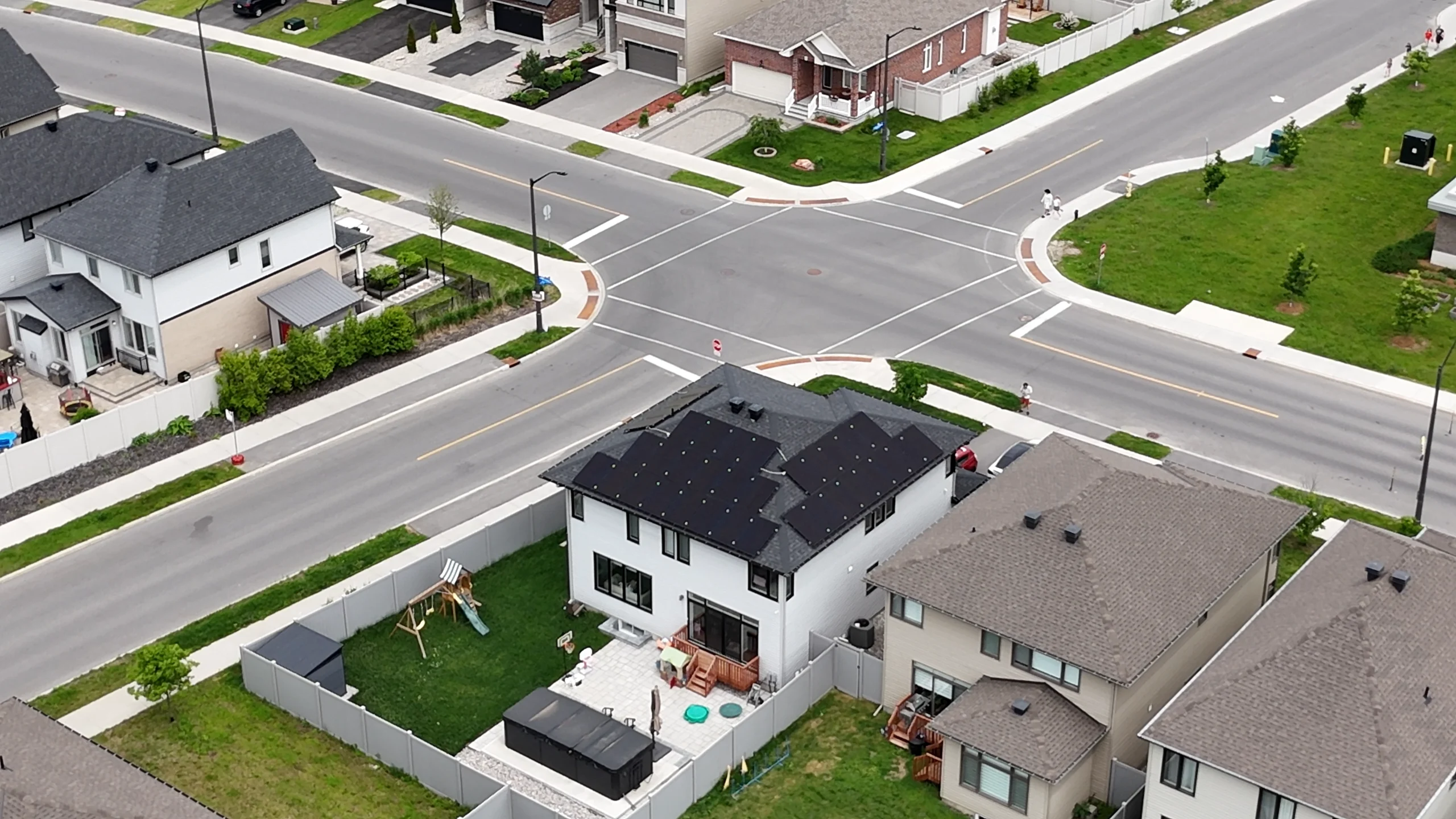
Georgia Power does not offer traditional net metering to new residential customers. Its programme, RNR-Instantaneous Netting, measures generation against household consumption at the instant it occurs. Electricity your home is drawing at that moment is offset at the full retail rate, because you simply do not buy it. Anything beyond your instantaneous demand is exported and credited at the annual Solar Avoided Cost Rate, 3.2188 cents per kWh for 2026, with a 4 cent per kWh adder approved in the 2022 rate case. Against a Georgia Power residential retail rate in the region of 14 to 15 cents, that means the same kilowatt hour is worth several times more consumed than exported. Nothing accumulates as a kilowatt hour bank to be drawn down later, so a sunny afternoon with nobody home is not stored value, it is a small credit. Two consequences follow. First, oversizing is penalised harder here than in almost any other state, and residential systems are capped at 10 kW AC in any case. Second, batteries and load shifting are worth more here than the national conversation suggests, because both convert low-value exports into high-value self-consumption. A separate monthly netting programme existed but was capped at 5,000 customers and filled in 2021, and is closed to new participants.
Every review here is real, attributed, and links back to the installer's verified Google profile.
"I signed up for information and was given a very professional assessment of my properties potential with detailed investment information and projected savings. No pressure and very courteous staff members"
"I was communicating with Josh. He put together a detailed proposal very quickly and provided two options to consider.Very pleased with his professionalism."

"We had difficulty with our monitoring site ans called for help. Ken not only got us back on the site, but introduced us to some new features. He spent a great deal of time with us and was patient and gave clear instructions as he walked us through the process. Very satisfied with support."

See which of these Georgia programs you qualify for, with the math done for your address. Free, no obligation.
Get my Georgia quote